Organic Farming in Anderson Valley
When we bought our vineyard, it was not organic. Changing that was one of the first commitments we made to this land, and one of the most important. What we have learned since is that taking a vineyard organic is not a switch you flip. It is a journey measured in seasons, and the vineyard sets the pace. Several years in, we are still on that journey, still asking the question that guides everything we do at Brashley: how can we be better, do better? That question sits at the heart of Cool by Nature. Our wines reflect the place where they are grown, which means the way we care for that place shapes everything that ends up in the glass.
Why organic matters in a place like this
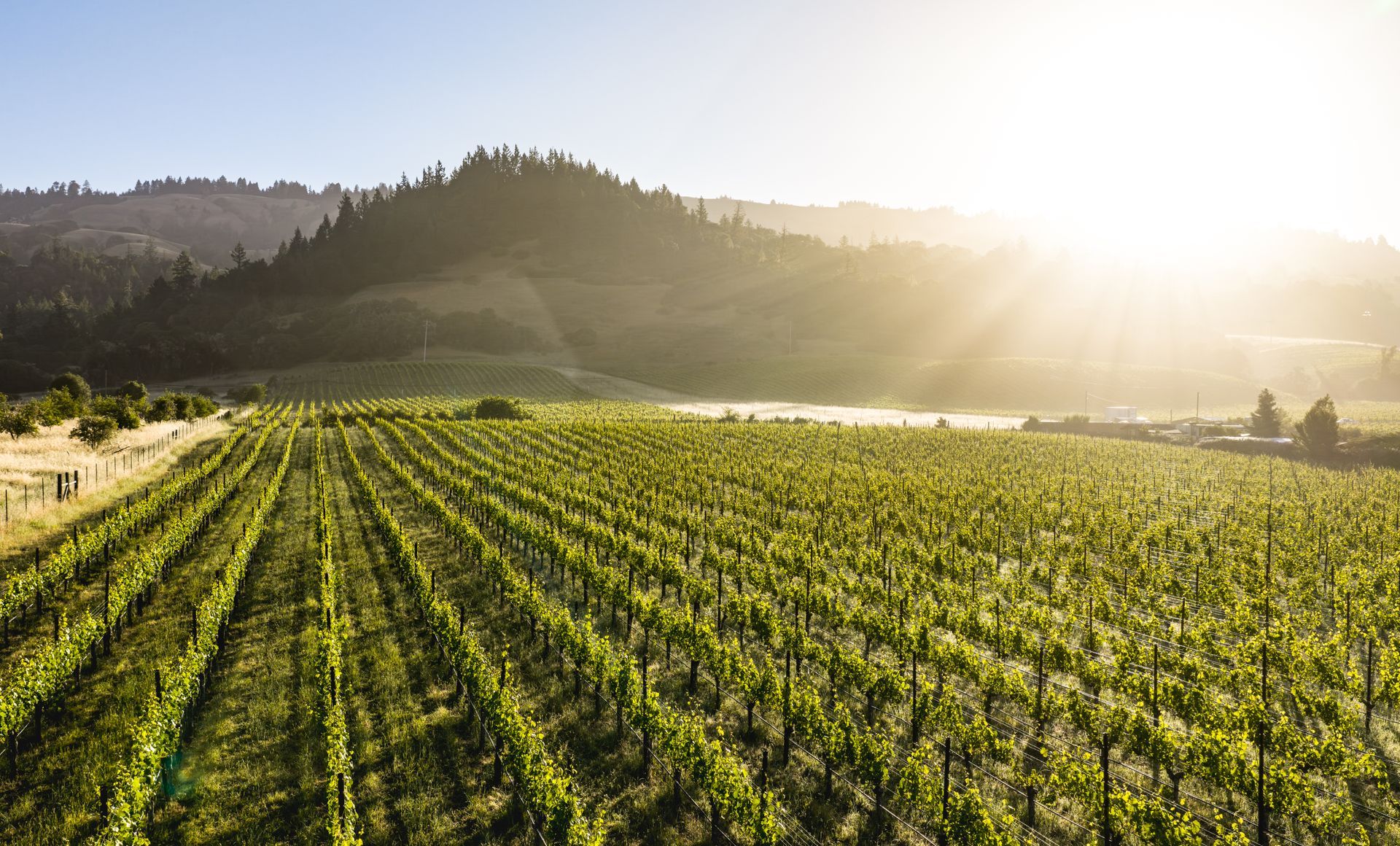
Anderson Valley is a living landscape. Fog moves in from the Mendocino Coast, redwoods rise at the vineyard edges and the valley shifts between cool mornings, warm afternoons and cold nights. The wines carry all of it.
Farming organically is how we keep that connection honest. When the soil is alive and the vineyard works with its surroundings rather than against them, the wine becomes a clearer reflection of the landscape instead of a style imposed upon it. It is also a long-term promise. Organic farming asks more patience of us in the short term, but it builds a vineyard that can give for generations.
One season at a time
A vineyard that has been farmed conventionally learns to depend on its inputs. Take those away too quickly and the vines struggle, because they have never had to be resilient on their own. For Ashley Holland, our winemaker, the transition has been a matter of patience and close attention. Push the vineyard too far, too fast, and you set it back. Instead, the inputs come off slowly, one practice at a time, with each season telling us how the vines are responding before we take the next step. Some years the change is visible from the road. Some years it is quiet work underground. Every year, it is something.
Building living soil without tilling
The foundation of the whole effort is no-till farming, which we moved to in 2021. We consider it the gold standard for building healthy vineyard soil. When the earth is left unturned, organic matter accumulates season after season. The soil holds water better, the microbial life stays intact and the vines grow steadily more resilient. That resilience shows up in practical ways: fewer mowing passes, fewer sprays and less intervention across the vineyard.
It shows up in the fruit, too. Healthier soil gives us grapes with a stronger point of view, and wines that express where they come from with more clarity and energy. For us, soil health is not just an environmental choice. It is a quality choice.
A new milestone: sheep among the vines
The monumental moment of this season was running sheep through the vineyard for the first time. Sheep are one of farming's oldest tools, and they turned out to be our newest step forward. They graze the cover crop and the weeds, leave natural fertility behind and replace tractor passes with hooves. The vineyard gets what it needs, and the soil is disturbed less in the process.
The first season was a clear win, and the sheep will be back. It is a good picture of how this journey works: every year we try something different, measure it against the vineyard's response and keep what makes the farming better.
Farming for the climate ahead
The past five vintages have brought real heat to California, and we farm with that reality in mind. Much of the work happens underground. By nurturing and nourishing the primary root ball, we help each vine build the deep resilience it needs to withstand hot spells when they arrive. A vineyard with living soil and strong roots weathers extremes far better than one propped up by inputs.
We are also fortunate in where we farm. The fog pattern in Anderson Valley has not changed. Marine air still follows the Navarro River corridor inland from the coast, cooling the vineyard through the mornings and settling back in as evening arrives. Cool by Nature, in the most literal sense.
Taste the difference in the glass
Our relationship with Anderson Valley began at Hacienda Sequoia, a small vineyard surrounded by towering redwoods and cooled by marine air moving inland. It shaped our belief in what wine from this region could become, and it continues to shape how we farm today.
Organic farming carries that belief forward. The wines it gives us are joyful and alive, with the freshness, balance and aromatic detail that define Anderson Valley. Each one carries the character of its site, because the site itself is thriving.
You can taste that difference at our tasting room along Highway 128 in Philo, surrounded by the landscape that shapes everything we pour. Explore the full range of wines grown this way in our Brashley wine collection, and if you would like to follow the journey from home, the Brashley Wine Club brings seasonal releases and small-lot wines straight from the valley to your door.
The journey to organic is not finished, and in the best sense it never will be. Every season brings a new question, and every vintage is our answer so far. We invite you to come taste where it has taken us.